
English| EUR
Suggested for you
More currencies
Choose a language
Karlovy Vary sits 130 kilometers west of Prague, reachable by direct bus, train or private transfer. This guide compares all transport options with journey times, costs and practical booking details to help you plan your spa-town visit.
Quick answer
The fastest way to travel from Prague to Karlovy Vary is by direct bus, taking approximately 2 hours 15 minutes. Buses depart from Prague's Florenc terminal throughout the day, with tickets starting around 150 CZK when booked in advance. Train connections require a transfer at Chomutov or Mariánské Lázně and take 3-4 hours, while private transfers offer door-to-door convenience in roughly 1 hour 45 minutes.
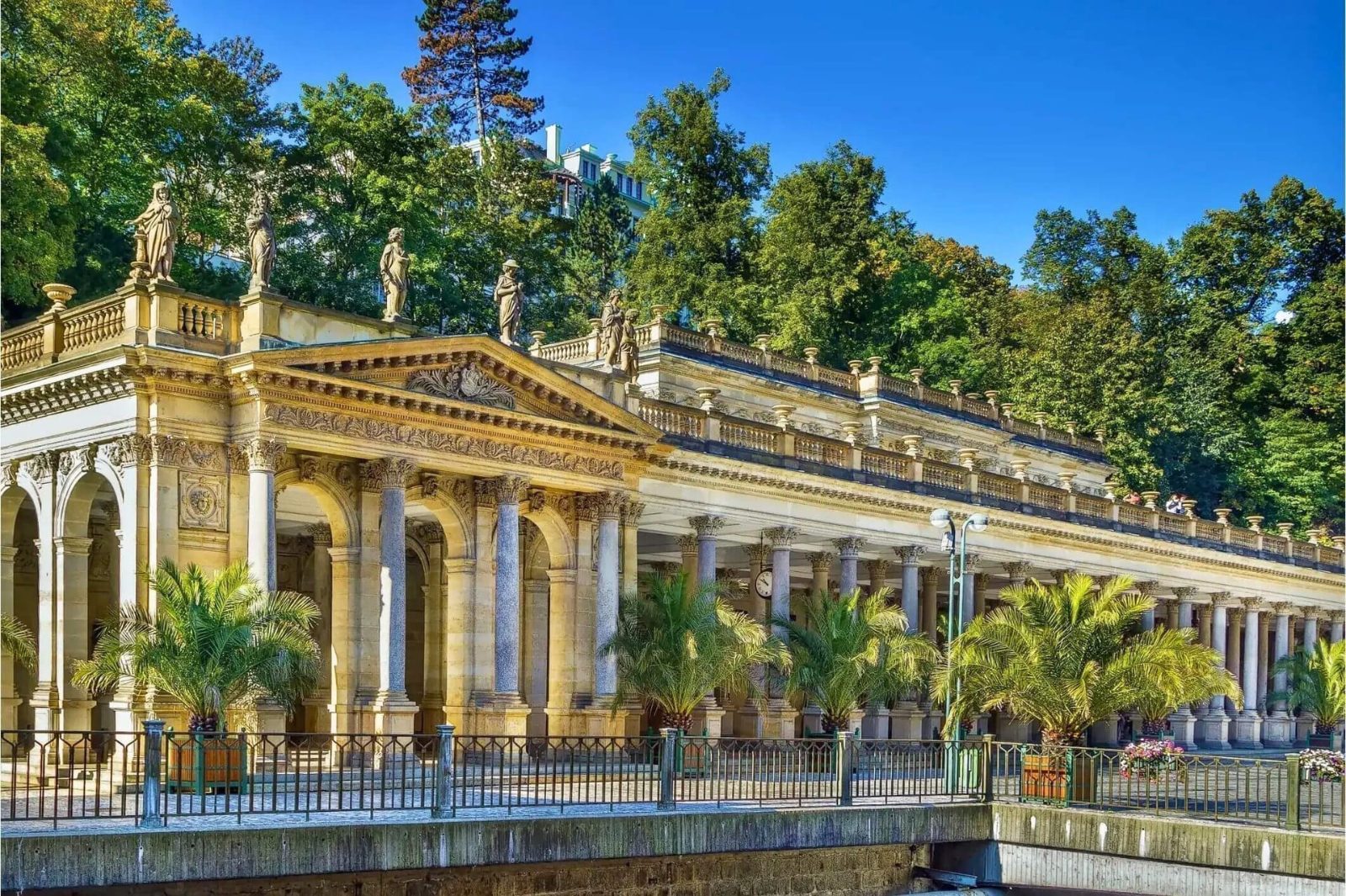
The 130-kilometer route connecting Prague and Karlovy Vary carries more than 200,000 visitors annually, making it one of the Czech Republic's busiest domestic tourism corridors. Most travelers choose the intercity bus for its combination of frequency, speed and affordability, though rail enthusiasts and those seeking flexibility have alternatives worth considering. Bus services dominate the Prague to Karlovy Vary route because they provide the most direct connection. Coaches operated by RegioJet and FlixBus depart from Florenc station every 60-90 minutes during peak season, following the D6 motorway through the rolling hills of western Bohemia. The journey passes industrial suburbs before entering forested countryside punctuated by small villages and the occasional castle silhouette. Arriving early in the morning allows a full day exploring the spa district, sampling thermal springs at the Mill Colonnade, and walking the Teplá River promenade before the afternoon tour-group surge. Train travel between the two cities requires patience. No direct rail link exists, so passengers transfer at either Chomutov or Mariánské Lázně depending on the routing. The longer journey time reflects the railway network's historical development rather than distance, as tracks wind through smaller towns that predate the modern highway system. Departure frequency drops in the afternoon, and seat reservations are recommended during summer weekends when Czech families travel to the spa region. Private transfers suit travelers with luggage, tight schedules or mobility concerns. Door-to-door service eliminates terminal waits and allows stops at roadside viewpoints overlooking the Ore Mountains. The westbound drive takes under two hours in light traffic, entering Karlovy Vary through the residential southern districts before reaching the spa quarter along the river valley. Most drivers speak functional English and accept payment in euros or Czech crowns. Booking windows matter. Bus operators release advance-purchase fares 60-90 days before departure, with the deepest discounts appearing for early-morning and late-evening runs. Train tickets cost the same regardless of purchase timing, but seat availability tightens on Friday afternoons and Sunday evenings when weekend traffic peaks. Understanding how to get from Prague to Karlovy Vary means weighing speed against cost, comfort against convenience, and the value of two saved hours against the experience of watching central European countryside roll past a train window.
“The 130-kilometer route connecting Prague and Karlovy Vary carries more than 200,000 visitors annually, making it one of the Czech Republic's busiest domestic tourism corridors.”
Karlovy Vary is located in the western part of the Czech Republic, approximately 130 kilometers from Prague. The city is efficiently accessible via direct bus and train services departing regularly from the capital.
RegioJet or FlixBus from Prague ÚAN Florenc to Karlovy Vary, Terminal
Line R45 from Praha hlavní nádraží to Karlovy Vary
Route D6 highway from Prague to Karlovy Vary
Arriving between 08:00–10:00 is recommended to avoid peak crowds and maximize your time in the spa town.
The best arrival window is 08:00–10:00, which allows travelers to navigate the spa town before peak daytime crowds arrive. Starting your journey early ensures sufficient time to explore the city's landmarks at a steady pace.
Mild, 12°C to 18°C
These shoulder months offer temperate conditions ideal for walking. The city remains accessible without the congestion of peak summer travel.
Warm, 15°C to 25°C
Expect the largest volume of visitors during these months. Arriving between 08:00–10:00 is essential to experience the colonnades before peak hours.
Cold, -1°C to 8°C
Visitor numbers are significantly lower during the cooler months. The quiet atmosphere provides a different perspective on the local spa culture.
Verdict: For the most balanced experience, aim for an 08:00–10:00 arrival on a weekday during May or September.
Karlovy Vary operates as a public municipality, meaning there is no entrance fee to access the city itself. All costs associated with a trip from Prague are limited to your chosen method of public or private transit.
Verdict: A typical visitor pays 0 CZK for city entry, with the total cost of a day trip determined solely by the transit tickets purchased.
This plan suits travelers making a day trip from Prague to Karlovy Vary, combining morning transit with afternoon exploration before returning to Prague. The full schedule spans approximately 10–11 hours door-to-door.
Board your chosen transport from Prague—bus, train, or private transfer—heading west toward Karlovy Vary. Travel time is roughly 2–2.5 hours depending on the mode.
Reach the spa town between 8:00 and 10:00 to avoid peak crowds. Drop bags at a locker or café if needed, then head toward the central colonnades.
Stroll the Mill Colonnade and Hot Spring Colonnade, sampling thermal spring water from the porcelain cups sold by vendors. Allow 1.5–2 hours to cover the main colonnades and riverside promenade.
Stop at a traditional Czech restaurant near the Tržní Colonnade for spa wafers and local cuisine. Budget 45–60 minutes for a relaxed meal.
Walk up to the Diana Observation Tower via funicular or trail, or visit the historic Church of St. Mary Magdalene. This segment takes 1.5–2 hours including photo stops.
Return to the town center for a last look at the Grandhotel Pupp or souvenir shops, then walk to your departure point. Aim to board return transport by 17:00–17:30.
Board your bus, train, or transfer back to Prague, arriving in the capital by early evening.
Karlovy Vary is a public city accessible to visitors at all times throughout the week. You may plan your arrival according to your own itinerary, as the city remains open every day.
Everything you need to know about how to get from prague to karlovy vary
Travelers typically utilize public transport, such as comfortable express buses or regional trains, to reach the destination efficiently. Understanding how to get from prague to karlovy vary is simple, as both transport modes are reliable and frequent. Choosing between rail or road depends on your preference for scenic views or direct city-to-city service.
The journey generally takes between two to two and a half hours depending on your chosen mode of transport. Knowing how to get from prague to karlovy vary allows you to plan your itinerary effectively and minimize travel time. Please check current schedules before departure to ensure you reach the spa town on time.
Yes, there are frequent daily bus and train connections linking the capital to this famous wellness destination. Figuring out how to get from prague to karlovy vary via these public transit options is straightforward for most visitors. Both systems offer consistent departures throughout the week.
No, there is no entrance fee to visit the city itself as it is a public municipality. While travel costs apply for public transport, your exploration of the streets and local architecture is free of charge. Learning how to get from prague to karlovy vary does not involve hidden city entry costs.
The best arrival window is between 08:00 and 10:00 to avoid peak crowds and maximize your daylight hours. Arriving during this period provides a better experience when visiting local mineral springs and promenades. Early planning is essential for a smooth transit experience.
The center of the spa town is pedestrian-friendly, making it easy to reach landmarks on foot after your arrival. Most attractions and colonnades are situated within a short distance of the main transit hubs. Public transport links provide a solid foundation for exploring the wider region.